
I Just Open-Sourced SmartReName

Twenty years ago, there was a small Chinese freeware tool called 拖把更名器 (SmartRename). If you needed to rename a few hundred files, it was the tool everyone reached for: a pipeline of operations, a preview before anything happened, and the comforting feeling that nothing could go wrong. Then it stopped being updated. These days it still runs — right after showing you an error dialog you have to click away.
I missed it. So I rebuilt it from scratch, clean-room, in Rust. Today I’m open-sourcing it: SmartReName.
GitHub: https://github.com/i-love-osaka/SmartRename
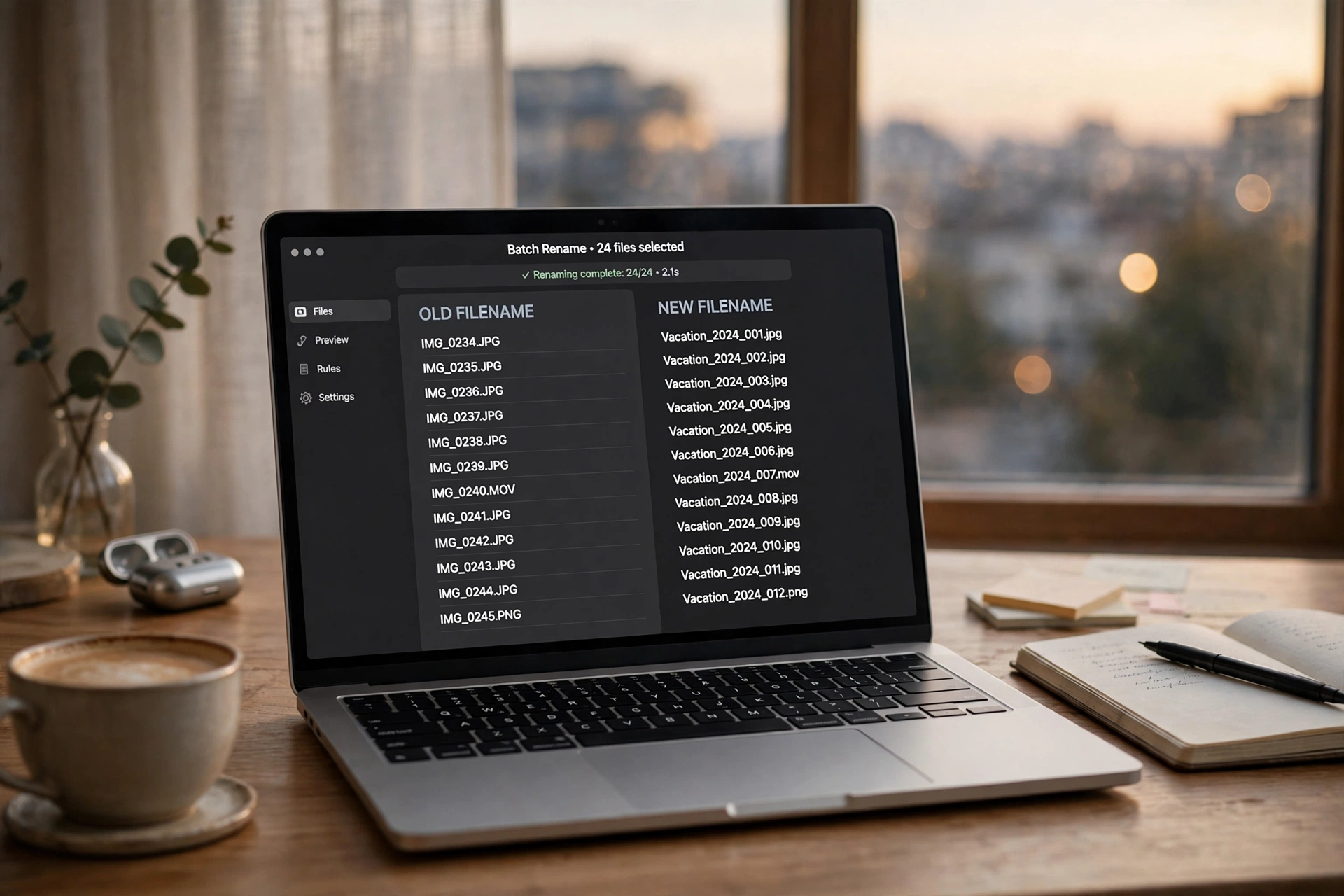
What I kept, and what I dropped
I kept the soul of the original: stack up operations — replace, numbering, add, delete — watch a live preview of every new name as you type, check for conflicts, then apply. And if anything goes wrong, undo puts every file back. Operation records can be saved as JSON and replayed later.
What I dropped is everything time made pointless: ID3 and RMVB tag editing, Explorer context menus, meta-variables, and the old proprietary record format. SmartReName does one thing: batch renaming.
The one feature I insisted on most: it starts with zero dialogs and zero errors. The original’s startup error was a small thing, but it was a daily paper cut. Not in this version.
What’s inside
- Replace with plain text or regular expressions — and because regex scares everyone (including me, some days), there is a built-in library of 15 practical examples under Help → Regex Examples, each explained, each with copy buttons; the four most common ones sit right in the Replace tab
- Numbering, add, delete by range or by substring
- One-click cleanup of the junk that downloads bring along: (1), – 副本, [site.com], full-width characters
- Naming styles — camelCase, PascalCase, snake_case, kebab-case — and Traditional ⇄ Simplified Chinese conversion
- Rename by date (EXIF, modified, or created), rename from the parent folder, and nine preset script commands like Chinese → pinyin
- Conflict detection with optional auto-numbering, per-file failure reasons that stay on screen, timestamps preserved if you want them
Under the hood it is two Rust crates: a platform-independent renaming engine with unit tests, and a native-feeling macOS UI (system menu bar, follows light/dark mode) built with egui — the same stack as PureMap. Execution is two-phase through temporary names, so a run never leaves your files half-renamed.
Status
macOS first (Apple Silicon); the engine is cross-platform and Windows is planned. The interface is currently in Chinese, like the original — English localization is very welcome. It is ad-hoc signed, so on first launch use right-click → Open.
Good tools deserve to outlive their maintainers. The original renamer served a generation of Windows users; if this version serves a few people on modern machines, it was worth the rewrite.
— Ben
I Just Open-Sourced Sizuya Booking

Running small guesthouses in Osaka means bookings should be simple: a guest finds a room, books it, pays, and walks in without a pile of messages in between.
So I built a booking website for my own houses. Today I open-sourced it: Sizuya Booking.

What it does
- Property listings for guests to browse
- Booking and guest information management
- Stripe payments
- TTLock smart lock integration
- A multilingual interface: English, Simplified Chinese, Traditional Chinese, Japanese, Korean, Spanish, French, and German
It is built with Django and PostgreSQL, the stack I use for my guesthouse tools.
Run it locally
With Docker and Docker Compose:
cp .env.example .env
docker compose up --build
docker compose exec web python manage.py migrate
Then visit http://localhost:8000
You can also run it with native Python 3.12 and PostgreSQL. The repository includes Nginx deployment references for production, but the Compose setup itself is for local development: for production, use a proper WSGI/ASGI server, HTTPS, and secure secret management. Never commit a real .env file or production credentials.
Get the code
Sizuya Booking is released under the MIT License:
https://github.com/i-love-osaka/homestay_booking
If you run a small guesthouse or vacation rental and you want a booking site you can own and adapt, I hope this saves you some work. Stars, issues, and pull requests are welcome.
This is another one of my guesthouse tools, out the door. One system at a time.
— Ben
I Just Open-Sourced Sizuya Passport
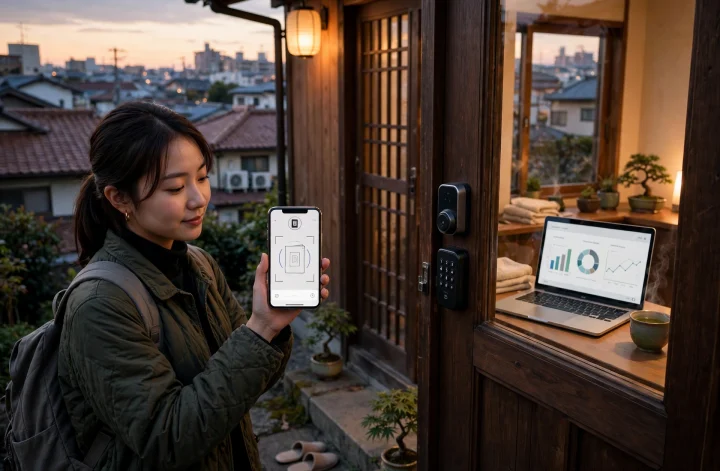
Running guesthouses in Osaka means paperwork. Japanese law requires us to record every guest’s information, and for foreign guests we also have to keep a copy of their passport. For a long time that meant chasing guests in chat apps: “Please send me a photo of your passport.” Some sent it, some forgot, some sent a blurry photo of the wrong page the night before check-in.
So I built a system for it. Today I open-sourced it: Sizuya Passport.
The idea is simple. Each booking gets a registration page. The guest opens it, fills in their information, and uploads a photo of their ID — a passport, or a Japanese My Number card for guests living in Japan.
The system checks the uploaded document, so I don’t have to eyeball every photo myself. Once the registration is complete, the guest automatically receives the door lock password for the property — the system works with TTLock smart locks and issues a dynamic password for the stay.
On my side, everything lives in one admin backend: guest information, orders, properties, and locks. When I need records — for bookkeeping, or in case the authorities ever ask — I can batch-download the guest information together with the ID images, as Excel and ZIP files.
The check-in page is multilingual. Our guests come from everywhere, so the page speaks Japanese, English, Simplified and Traditional Chinese, Korean, German, French, Spanish, and Arabic.
Under the hood it is the stack I always use: Python and Django 5, PostgreSQL, and Docker. One “docker compose up” and it runs. The code is on GitHub under the MIT license:
https://github.com/i-love-osaka/homestay_passport
One honest warning: a system like this handles passport images and personal data. If you run it, run it properly — HTTPS, access control, backups, and never, ever put real guest data in a public repository.
I built Sizuya Passport for my own houses here in Osaka. If you run a small guesthouse or vacation rental in Japan and you are still collecting passport photos over chat, maybe it saves you the same headaches it saved me.
More of my guesthouse tools will follow it out the door. One system at a time.
Introducing Sizuya Net Clean
I’m happy to share that Sizuya Net Clean is now open source.
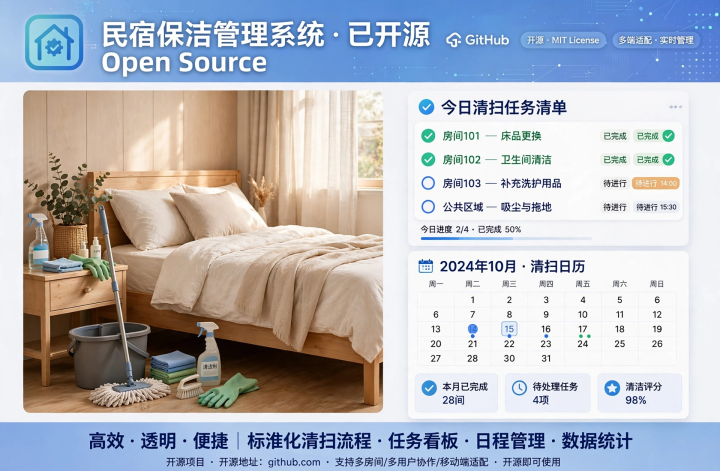
Built with Django, this project helps streamline cleaning photo reports for vacation rentals. Cleaners can follow a property-specific checklist, upload photos one item at a time, and leave a final remark. Administrators can manage photo items and review completed reports through Django Admin.
The app also generates photo thumbnails and includes a command to clean up incomplete uploads. It’s released under the MIT License.
If you’re working on a similar workflow—or just want to explore the code—you can find the project on GitHub.
I hope it’s useful, and I’d love to hear what you build with it.
I Just Open-Sourced My First Project: PicWolf
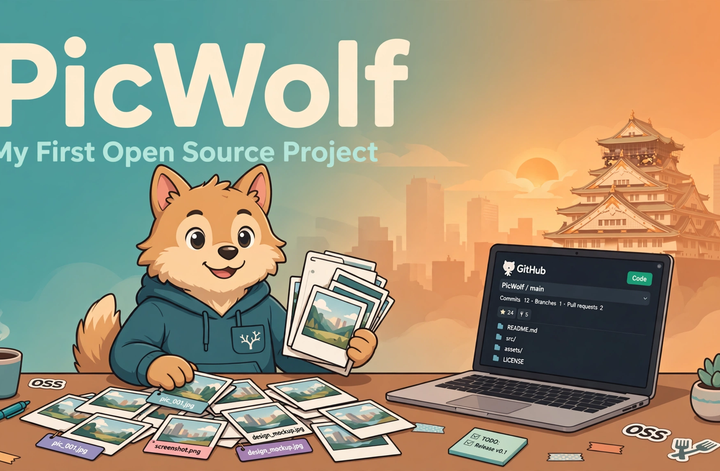
After months of cleaning guesthouses in Osaka by day and coding by night, I finally did it. My first open source project is live:
👉 https://github.com/i-love-osaka/PicWolf
Why I built PicWolf
Living in Osaka, I deal with hundreds of photos every week — minshuku rooms, check-in guides, food maps for guests. My folder was a mess: IMG_1234.jpg, IMG_1234 (1).jpg, 10MB iPhone photos that take forever to upload.
I tried existing tools, but they were either too heavy, too expensive, or needed me to upload my guests’ photos to some random server. I wanted something fast, local, and a little bit fun. So I built a wolf that eats your messy pics.
That’s PicWolf.
What is PicWolf?
PicWolf is a fast, privacy-first batch image toolkit, written in Rust.
No window to open, no files to drag into an app. You select photos in Finder (macOS) or File Explorer (Windows), right-click, and PicWolf does the boring work — right where the files already live.
Current features:
- Compress to JPG at about 80% or 50% of the original file size
- Rotate right, flip horizontally
- Convert to JPG or PNG
- HEIC/HEIF input on macOS (your iPhone photos just work)
- Results are saved next to the originals; if a file name already exists, PicWolf appends a number instead of overwriting
- 100% local — no images ever leave your machine
Under the hood: a Rust core, a Finder Sync extension on macOS, and right-click menu integration on Windows (the Windows build is cross-compiled from my Mac). Every push runs tests and release builds on Linux, macOS, and Windows.
How to use it
Most of the time, there is nothing to “use” — install it once, and the actions live in your right-click menu:
- Select one or more photos in Finder or Explorer
- Right-click → PicWolf
- Pick an action: smaller JPG, rotate, flip, or convert
Prefer the command line? That works too:
PicWolf.exe --action reduce20 "C:\Pictures\photo.jpg"Supported actions: reduce20, reduce50, rotate90, flipHorizontal, jpg, png.
It took me 15 minutes to clean 2GB of room photos yesterday. That used to take an hour.
What I learned shipping my first open source project
- Done > Perfect. I wanted to add 10 more features. I shipped with the few that matter.
- README is the product. No one will use it if they can’t understand it in 30 seconds.
- Building in public is scary, but kind. This is my first repo and I’m already getting kind feedback.
This is very much v0.1. There are rough edges, and the docs are half in Chinglish. That’s okay.
PicWolf is also where I’m learning Rust in the open — one real tool, built for a real problem in my daily work.
What’s next?
- A drag & drop window for people who don’t live in the right-click menu
- One-click presets for Airbnb / Booking.com photo requirements
- Homebrew release:
brew install picwolf
If you work with images, run a minshuku, or just like wolves, I’d love your feedback.
Give it a star if it saved you 5 minutes, open an issue if it broke, and PRs are super welcome — especially from fellow Osaka folks!
Thanks for reading. From a small apartment in Osaka to GitHub.
— Ben @ i-love-osaka