I Just Open-Sourced Sizuya Booking

Running small guesthouses in Osaka means bookings should be simple: a guest finds a room, books it, pays, and walks in without a pile of messages in between.

So I built a booking website for my own houses. Today I open-sourced it: Sizuya Booking.

What it does

  • Property listings for guests to browse
  • Booking and guest information management
  • Stripe payments
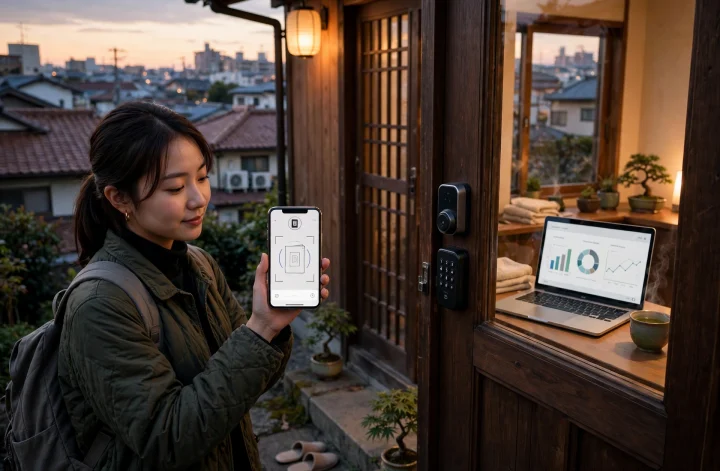
  • TTLock smart lock integration
  • A multilingual interface: English, Simplified Chinese, Traditional Chinese, Japanese, Korean, Spanish, French, and German

It is built with Django and PostgreSQL, the stack I use for my guesthouse tools.

Run it locally

With Docker and Docker Compose:

cp .env.example .env
docker compose up --build
docker compose exec web python manage.py migrate

Then visit http://localhost:8000

You can also run it with native Python 3.12 and PostgreSQL. The repository includes Nginx deployment references for production, but the Compose setup itself is for local development: for production, use a proper WSGI/ASGI server, HTTPS, and secure secret management. Never commit a real .env file or production credentials.

Get the code

Sizuya Booking is released under the MIT License:

https://github.com/i-love-osaka/homestay_booking

If you run a small guesthouse or vacation rental and you want a booking site you can own and adapt, I hope this saves you some work. Stars, issues, and pull requests are welcome.

This is another one of my guesthouse tools, out the door. One system at a time.

— Ben

Continue Reading

I Just Open-Sourced Sizuya Passport

Running guesthouses in Osaka means paperwork. Japanese law requires us to record every guest’s information, and for foreign guests we also have to keep a copy of their passport. For a long time that meant chasing guests in chat apps: “Please send me a photo of your passport.” Some sent it, some forgot, some sent a blurry photo of the wrong page the night before check-in.

So I built a system for it. Today I open-sourced it: Sizuya Passport.

The idea is simple. Each booking gets a registration page. The guest opens it, fills in their information, and uploads a photo of their ID — a passport, or a Japanese My Number card for guests living in Japan.

The system checks the uploaded document, so I don’t have to eyeball every photo myself. Once the registration is complete, the guest automatically receives the door lock password for the property — the system works with TTLock smart locks and issues a dynamic password for the stay.

On my side, everything lives in one admin backend: guest information, orders, properties, and locks. When I need records — for bookkeeping, or in case the authorities ever ask — I can batch-download the guest information together with the ID images, as Excel and ZIP files.

The check-in page is multilingual. Our guests come from everywhere, so the page speaks Japanese, English, Simplified and Traditional Chinese, Korean, German, French, Spanish, and Arabic.

Under the hood it is the stack I always use: Python and Django 5, PostgreSQL, and Docker. One “docker compose up” and it runs. The code is on GitHub under the MIT license:

https://github.com/i-love-osaka/homestay_passport

One honest warning: a system like this handles passport images and personal data. If you run it, run it properly — HTTPS, access control, backups, and never, ever put real guest data in a public repository.

I built Sizuya Passport for my own houses here in Osaka. If you run a small guesthouse or vacation rental in Japan and you are still collecting passport photos over chat, maybe it saves you the same headaches it saved me.

More of my guesthouse tools will follow it out the door. One system at a time.

Continue Reading

One Year in Osaka. Time to Go Back to Work.

It’s been a little over a year since I moved to Osaka.

I didn’t do anything heroic this year. I learned my neighborhood. I found my cafes, my walking routes, my regular places. I ran my small guesthouses, fixed what broke, and coded quietly at night — a booking system here, a little Rust tool there.

Mostly, I rested.

After twenty-plus years of rushing — building, teaching, running businesses, starting over more than once — I gave myself one slow year in a city that knows how to take its time. Osaka never asked me to hurry. The trains came on time. The streets stayed kind. Slowly, the tiredness left, and the appetite came back.

So this is me saying it out loud: I’m getting back to work.

I’m looking for a full-time engineering role here in Osaka — and with it, I’ll be changing my residence status to a proper work visa. Putting down roots, officially this time.

My main hand is Python and Django. I’ve been building web systems since 1998, and these days I build the software behind my own guesthouses: bookings, payments, cleaning schedules — the unglamorous stuff that has to work every single day. I’m also learning Rust in the open. My latest toy is PicWolf, a little image tool that lives in your right-click menu.

What am I looking for? A real team, building a real product, in Osaka or remote within Japan. If the work helps guests, hosts, or anyone crossing borders to live and build a life here — even better. That’s the world I live in now.

If you’re building something like that, or you know someone who is — say hello. My code is on GitHub (github.com/i-love-osaka), and my inbox is open.

One good year of rest. Now, back to building.

— Ben

Continue Reading

Introducing Sizuya Net Clean

I’m happy to share that Sizuya Net Clean is now open source.

Built with Django, this project helps streamline cleaning photo reports for vacation rentals. Cleaners can follow a property-specific checklist, upload photos one item at a time, and leave a final remark. Administrators can manage photo items and review completed reports through Django Admin.

The app also generates photo thumbnails and includes a command to clean up incomplete uploads. It’s released under the MIT License.

If you’re working on a similar workflow—or just want to explore the code—you can find the project on GitHub.

I hope it’s useful, and I’d love to hear what you build with it.

GitHub: https://github.com/i-love-osaka/homestay-clean

Continue Reading

I Built a Simple Yet Powerful Corporate Website with Django

I Built a Production-Ready Corporate Website Template with Django

Every small business needs the same thing: a clean website with company info, news, products, careers, and a contact form.

But most starters are either too simple (just a landing page) or too complex (full CMS like Wagtail / WordPress).

So I built something in the middle — practical, easy to maintain, and ready to grow.

👉 GitHub: sizuya-corporate-website

The Problem

  • One-page templates can’t handle news, products, or recruitment
  • WordPress is heavy if you just want to manage content simply
  • Most Django starters are blogs or e-commerce, not corporate

I wanted a single project that covers 90% of what a real company website needs, without over-engineering.

What It Includes

  • Flexible Page Management: Company, About, Privacy Policy via Admin
  • News / Articles: Categorized listing with detail pages
  • Products: Product catalog with images and descriptions
  • Recruitment: Job openings and application flow
  • Contact & Message Board: Form + admin inbox
  • Multilingual Ready: i18n content in Django Admin
  • Admin-First Workflow: No template editing needed

Tech Stack

  • Backend: Django + PostgreSQL
  • Dev: Docker Compose for local development
  • Content: Django Admin

Get Started in 2 Minutes

  1. Configure env:

cp .env.example .env

  1. Edit .env and set DATABASE_URL and DJANGO_SECRET_KEY
  2. Run:

docker compose up -d –build
docker compose exec web python manage.py migrate
docker compose exec web python manage.py createsuperuser

Visit http://localhost:8000 and http://localhost:8000/admin

Note: Compose setup is for local dev. For production, use Gunicorn + Nginx, HTTPS, and S3 for static/media.

Who Is This For?

  • Freelancers who need to ship a company site in a day
  • Small businesses who want to own their code
  • Django beginners who want a real-world structure

If you try it, stars and feedback are welcome!

— Ben

Continue Reading

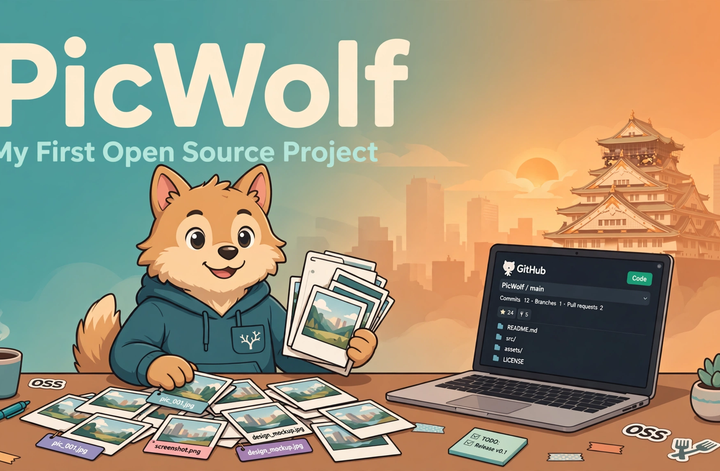
I Just Open-Sourced My First Project: PicWolf

After months of cleaning guesthouses in Osaka by day and coding by night, I finally did it. My first open source project is live:

👉 https://github.com/i-love-osaka/PicWolf

Why I built PicWolf

Living in Osaka, I deal with hundreds of photos every week — minshuku rooms, check-in guides, food maps for guests. My folder was a mess: IMG_1234.jpg, IMG_1234 (1).jpg, 10MB iPhone photos that take forever to upload.

I tried existing tools, but they were either too heavy, too expensive, or needed me to upload my guests’ photos to some random server. I wanted something fast, local, and a little bit fun. So I built a wolf that eats your messy pics.

That’s PicWolf.

What is PicWolf?

PicWolf is a fast, privacy-first batch image toolkit, written in Rust.

No window to open, no files to drag into an app. You select photos in Finder (macOS) or File Explorer (Windows), right-click, and PicWolf does the boring work — right where the files already live.

Current features:

  • Compress to JPG at about 80% or 50% of the original file size
  • Rotate right, flip horizontally
  • Convert to JPG or PNG
  • HEIC/HEIF input on macOS (your iPhone photos just work)
  • Results are saved next to the originals; if a file name already exists, PicWolf appends a number instead of overwriting
  • 100% local — no images ever leave your machine

Under the hood: a Rust core, a Finder Sync extension on macOS, and right-click menu integration on Windows (the Windows build is cross-compiled from my Mac). Every push runs tests and release builds on Linux, macOS, and Windows.

How to use it

Most of the time, there is nothing to “use” — install it once, and the actions live in your right-click menu:

  1. Select one or more photos in Finder or Explorer
  2. Right-click → PicWolf
  3. Pick an action: smaller JPG, rotate, flip, or convert

Prefer the command line? That works too:

PicWolf.exe --action reduce20 "C:\Pictures\photo.jpg"

Supported actions: reduce20, reduce50, rotate90, flipHorizontal, jpg, png.

It took me 15 minutes to clean 2GB of room photos yesterday. That used to take an hour.

What I learned shipping my first open source project

  1. Done > Perfect. I wanted to add 10 more features. I shipped with the few that matter.
  2. README is the product. No one will use it if they can’t understand it in 30 seconds.
  3. Building in public is scary, but kind. This is my first repo and I’m already getting kind feedback.

This is very much v0.1. There are rough edges, and the docs are half in Chinglish. That’s okay.

PicWolf is also where I’m learning Rust in the open — one real tool, built for a real problem in my daily work.

What’s next?

  • A drag & drop window for people who don’t live in the right-click menu
  • One-click presets for Airbnb / Booking.com photo requirements
  • Homebrew release: brew install picwolf

If you work with images, run a minshuku, or just like wolves, I’d love your feedback.

Give it a star if it saved you 5 minutes, open an issue if it broke, and PRs are super welcome — especially from fellow Osaka folks!

Thanks for reading. From a small apartment in Osaka to GitHub.

— Ben @ i-love-osaka

Continue Reading

A Slow Weekend in Kyoto: No Temples, No Tourist Traps

Everyone tells you to see Fushimi Inari, Kinkaku-ji, and the bamboo grove in a single day. I’ve done that. It’s miserable.This time, I took the local train to Kyoto on Friday evening, checked into a tiny guesthouse near Demachiyanagi, and did absolutely nothing planned.Saturday morning I walked along the Kamo River until I found a quiet coffee shop. I read for two hours. Then I wandered into the Philosopher’s Path backwards — no crowds, just moss and silence. In the evening, I ate yudofu at a family-run place near Nanzen-ji that didn’t have an English menu.Sunday was more of the same. No agenda. No checklist. I took the bus to Ginkaku-ji, skipped the temple itself, and sat on a bench watching the trees.Kyoto isn’t a place to collect sights. It’s a place to slow down. Next time you go, leave half the itinerary in your hotel. You won’t regret it.

Continue Reading

I Rebuilt My Side Business in Python — Here is What I Learned

When I first started managing vacation rentals in Osaka, everything ran on spreadsheets, WhatsApp messages, and luck. It worked for a while, but as I added more properties, the chaos grew.I kept missing cleaning schedules. Guests arrived to dirty apartments. I forgot to reply to inquiries. My calendar was a mess of overlapping bookings.So I decided to rebuild the whole thing in Python. I didn’t want a SaaS — I wanted something that fit exactly how I work.Three months later, I have a small internal tool that handles bookings, sends automated messages to cleaners, tracks guest arrivals, and even pulls pricing from a calendar. It’s not pretty, but it’s mine, and it runs reliably.The biggest lesson: you don’t need a fancy framework. A few well-organized Python scripts, a SQLite database, and a clear understanding of your own workflow will beat any off-the-shelf solution. Build the thing you actually need, not the thing someone else thinks you need.

Continue Reading

Why I Left My Comfort Zone to Start Over in Japan

Three years ago, I had a stable job, a rented apartment I knew by heart, and a group of friends I’d known since university. On paper, everything was fine.But fine was the problem. I felt like I was watching my own life from the outside — showing up, doing the work, going home, and repeating. I wasn’t growing. I was just maintaining.So I sold most of my things, booked a one-way ticket to Osaka, and started over. The first six months were brutal. I couldn’t read the train signs. I burned instant noodles for dinner more times than I’d like to admit. I cried in a 100-square-foot bathroom after a particularly hard language test.But slowly, things shifted. I met neighbors who taught me how to order takoyaki. I started a small vacation rental business. I picked up coding again at night. And for the first time in years, I felt like I was building something that was actually mine.Leaving your comfort zone isn’t glamorous. It’s mostly awkward and exhausting. But if you’re reading this and feeling stuck, I’ll say what I wish someone had told me: the discomfort is temporary. The regret of never trying is not.

Continue Reading

10 Hidden Cafes Locals Actually Love in Osaka

Osaka is full of tiny, amazing cafes that never make it to the tourist guides. After two years living here, I’ve found my favorite spots — quiet, cheap, and full of regulars.From a 6-seat coffee stand in Hozenji Yokocho to a hidden matcha salon near Sakai, these are the places I bring guests when they visit.No fancy latte art. Just good coffee, slow afternoons, and the kind of quiet that makes you forget you’re in one of the busiest cities on earth.

Continue Reading